The annual plan was approved. Budgets set, milestones agreed, resources allocated. Three months later, the cracks appeared. Operations was planning a production ramp on one set of assumptions. Finance had modelled revenue on another. This was not a planning failure — it was a commercial architecture failure.
The head office closes the books on Day 5. The subsidiary closes on Day 15. By the time the numbers reconcile, the board has already approved the next capital allocation decision. This is not a reporting delay — it is a governance gap.
The project reached first production on time and on budget. Six months later, a lender covenant breach notice arrived. The project had not failed — but the governance model that delivered it was never designed to govern the business that followed.
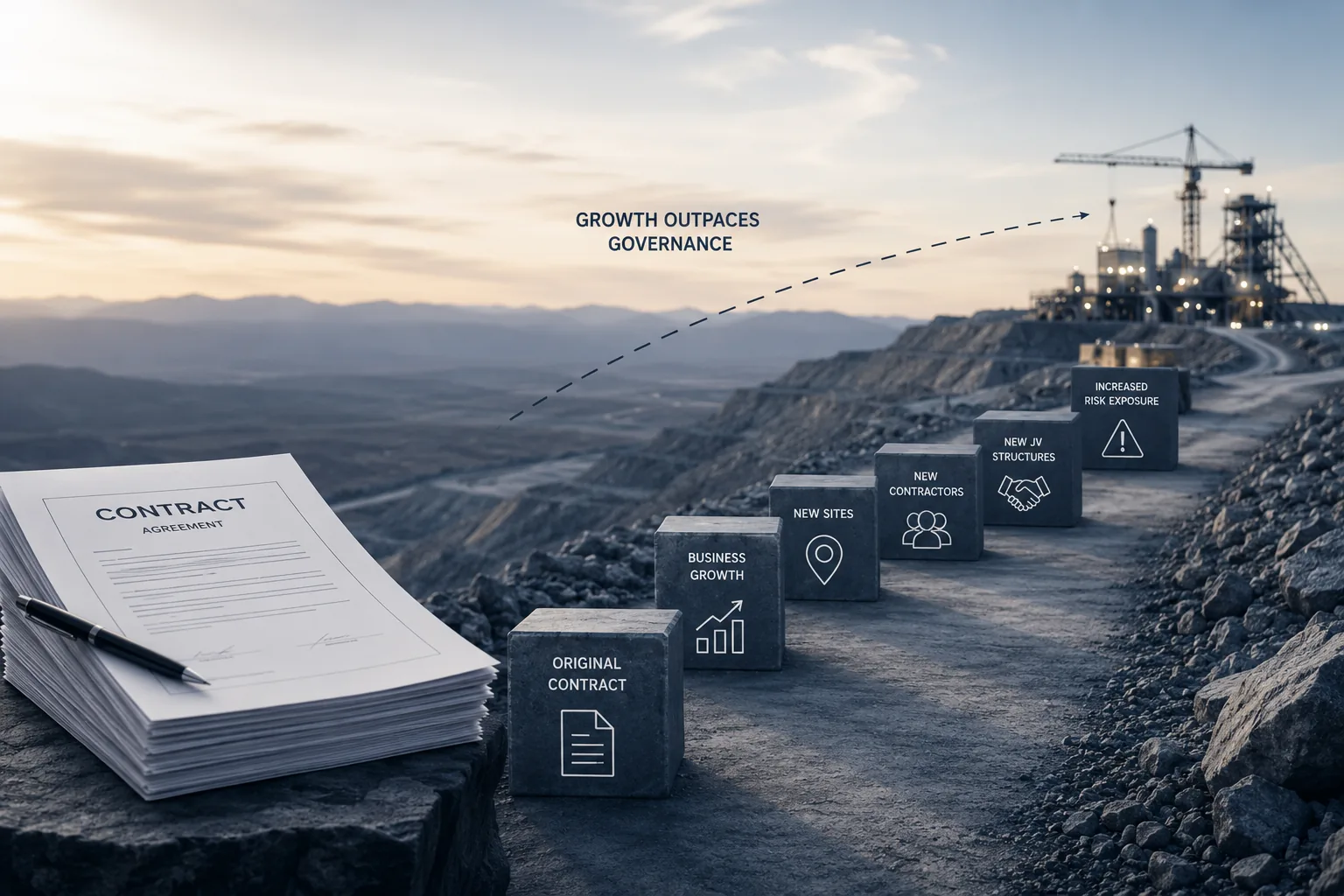
The company doubled in size. New projects, sites, contractors, joint ventures. Then a dispute emerged — and the contract signed two years ago no longer reflected the business it governed. This is not a legal failure. It is a governance failure.
Boards establish governance frameworks with care — delegations, procurement policies, approval matrices, risk registers. Yet budget overruns, procurement irregularities and delayed reporting persist. The answer is often simpler than expected: governance exists on paper, but execution exists in data, and the two are disconnected.
ERP systems capture transactions. They do not automatically deliver decision-ready information or reliable enterprise AI. For capital-intensive businesses, the next step is to create governed commercial data products that connect ERP and operational information with finance, controls and strategy.